Promoting high-performing employees into leadership roles is one of the most common talent decisions organizations make. On the surface, it makes sense. Someone who consistently delivers strong results, solves problems quickly, and demonstrates expertise often appears ready for greater responsibility.
But leadership is not simply the next step after individual success.
The skills that help someone excel as an individual contributor are often very different from the skills required to lead, develop, and motivate others. When organizations assume top performers will naturally become effective leaders, they risk placing talented employees into roles that may not align with their strengths, communication style, or motivations.
This does not mean strong contributors cannot become excellent leaders. Many do. But the transition requires self-awareness, support, and a different way of working.
Leadership requires a different mindset
Individual contributors are typically rewarded for personal achievement. Their success often comes from expertise, speed, accuracy, independence, or technical capability. Leadership, however, shifts the focus away from personal output and toward enabling the success of others. That transition can be challenging.
New managers often discover that leadership involves coaching, listening, influencing, communicating clearly, navigating conflict, and building trust across different personalities and working styles. Instead of solving every problem themselves, they need to delegate effectively and help others grow.
Organizations have historically treated management as the primary path for career progression, even though many employees create enormous value outside of leadership roles. High-performing employees may struggle as managers because strong tactical execution does not automatically translate into coaching ability, emotional intelligence, or strategic leadership skills. Indeed, many organizations are reconsidering traditional promotion structures because employees who excel as individual contributors do not always have the desire or capabilities needed to lead people effectively.
Personality and leadership fit matter
One important factor often overlooked in leadership decisions is personality. Different roles naturally require different behavioral strengths. Someone who thrives in a highly independent, detail-focused, or specialist role may not feel energized by the constant interpersonal demands of leadership. Another employee may naturally enjoy collaboration, coaching, communication, and influencing others. Neither profile is ‘better’. They are simply different.
Effective leadership often depends on qualities such as adaptability, resilience, empathy, communication, and the ability to balance task focus with people focus. Personality influences how individuals respond to pressure, handle conflict, make decisions, and motivate teams. This is why leadership development should never rely solely on performance metrics or tenure. Understanding behavioral tendencies and workplace motivations provides a much fuller picture of leadership readiness.
Importantly, personality should never be viewed as limiting. Self-awareness helps individuals recognize both their natural strengths and the areas they may need to intentionally develop if they move into leadership roles.
Download the eBook: The Quick Guide to Leadership Development
Communication styles shape leadership effectiveness
One of the biggest differences between individual contribution and leadership is communication. Strong contributors can often succeed by relying primarily on their own expertise. Leaders succeed through relationships, alignment, and influence. That requires the ability to adapt communication styles to different people and situations.
Some leaders communicate very directly and move quickly toward decisions. Others take a more collaborative or supportive approach. Problems arise when managers assume everyone works, thinks, or communicates the same way they do.
Employees who feel misunderstood, unheard, or unsupported are less likely to stay engaged. In fact, many organizations face communication gaps between leaders, managers, and employees, while only a minority of managers have received formal communication training in recent years.
Leadership communication is not about charisma or authority. It is about clarity, adaptability, trust, and understanding how different people respond to feedback, change, and collaboration.
Self-awareness is often the difference
Technical expertise may help someone earn a promotion. Self-awareness often determines whether they succeed once they arrive. Leaders who understand their own behavioral tendencies are typically better equipped to manage their stress, adapt their approach, and recognize how their actions affect others. They are also more open to feedback and development.
Without self-awareness, high-performing employees can unintentionally fall into common leadership traps. Some struggle to delegate because they are used to maintaining control over outcomes. Others become frustrated when team members do not work the same way they do. Some avoid difficult conversations altogether.
The Chartered Management Institute (CMI) highlighted the growing problem of ‘accidental managers’, those employees promoted because of technical expertise or strong individual performance without sufficient preparation for leading people. CMI’s research found that many organizations still prioritize functional capability over broader leadership qualities such as empathy, communication, and the ability to inspire and support others.
CMI research also found that 82% of managers enter leadership roles without formal management or leadership training, reinforcing the need for organizations to assess leadership readiness more holistically. Leadership capability is rarely about perfection. It is about understanding yourself well enough to continue learning and adjusting over time.
Read more: How self-aware leadership and safe feedback cultures improve retention and engagement at work.
Identifying leadership potential earlier
Organizations that approach leadership development proactively are often better positioned to retain talent and build stronger teams over the long term. This is where structured behavioral insight plays an important role.
McQuaig’s assessment tools help HR teams identify leadership potential earlier in the employee lifecycle by providing deeper insight into personality, communication style, motivation, and workplace behavior. The McQuaig Job Survey® helps organizations define the behavioral requirements for success in a specific role, including leadership positions. The McQuaig Word Survey® provides insight into an individual’s natural working style, strengths, and communication preferences, while the McQuaig Self-Development Survey® supports self-awareness and development conversations.
Together, these tools help organizations make more informed talent decisions. They can support succession planning, leadership development, coaching, and retention strategies by helping employees better understand where they are most likely to thrive.
Just as importantly, these insights help organizations recognize that leadership is not the only valuable career path. Some employees are exceptionally well suited to specialist, technical, creative, or advisory roles where they can continue to contribute at a very high level without managing people directly. When organizations create space for both leadership and non-leadership career growth, they are better able to retain talented individuals, strengthen engagement, and support long-term development across the workforce.
In the end, strong leadership is not simply about promoting the highest performer. It is about understanding people well enough to place them where they can succeed and continue growing.
Join the conversation ...
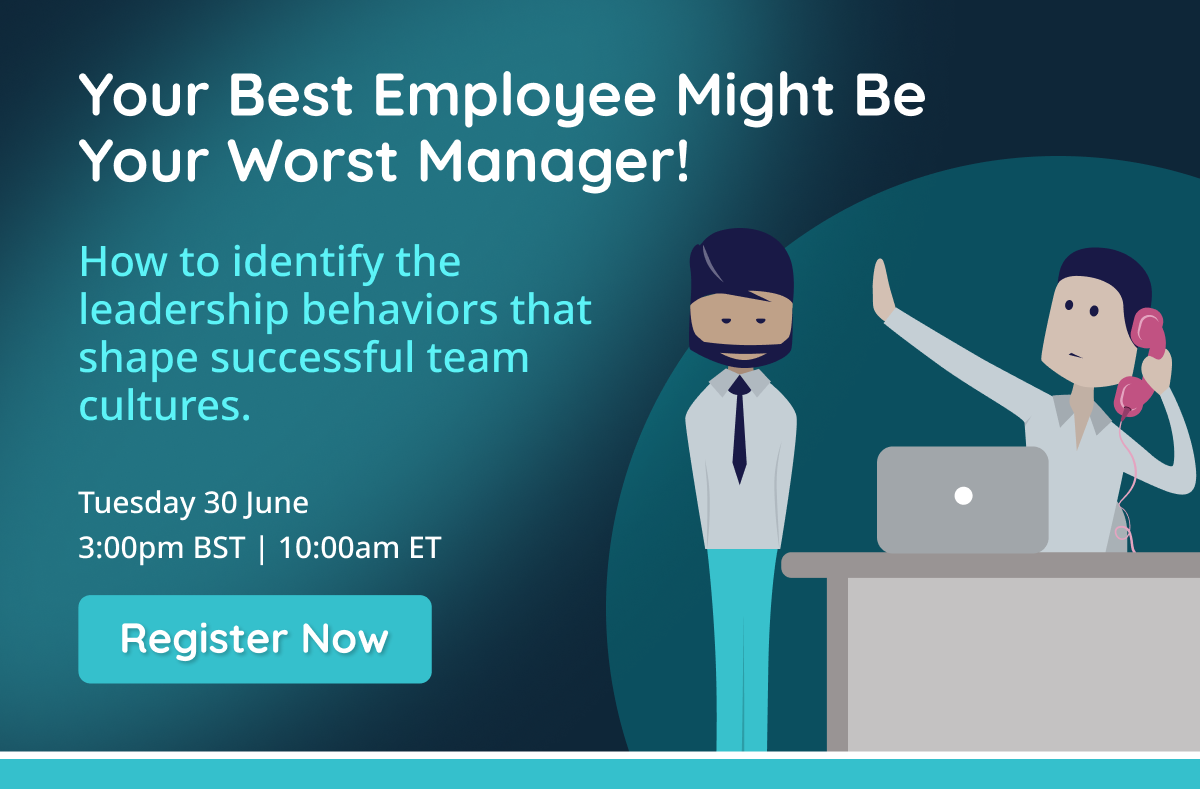
Join our upcoming webinar, 'Your Best Employee Might Be Your Worst Manager!' on Tuesday 30 June at 3pm BST / 10am ET as we explore why leadership effectiveness requires a very different skill set than individual contribution, and why self-awareness and constructive feedback are critical to leadership growth.
Register here.