As McQuaig approaches its 60th anniversary, we explore what six decades of people insight can teach us about building workplaces where everyone can thrive.
For nearly 60 years, McQuaig has helped organizations understand what drives people, how they work best, and what supports their success. That understanding helps leaders make more informed hiring decisions, develop talent, and build stronger teams. But as workplaces evolve, an important question deserves greater attention: Are we creating the right conditions for people to put their strengths to work?
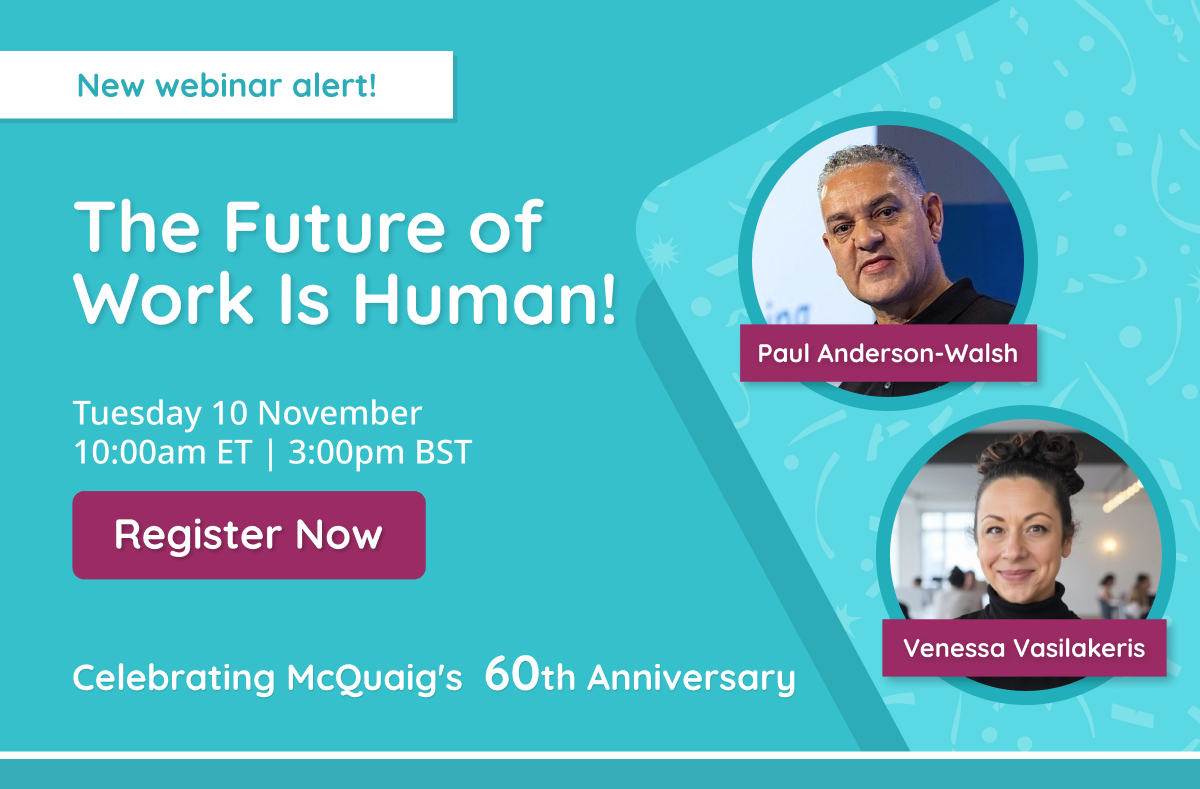
It's a question at the heart of our upcoming anniversary webinar, The Future of Work Is Human, featuring Paul Anderson-Walsh of Enolla Consulting.
From understanding individuals to helping them thrive
Every person brings a unique combination of strengths, motivations, experiences, and perspectives to work. Understanding those differences matters. Behavioral insight helps leaders recognize potential, communicate more effectively, and support individual development.
However, insight alone cannot determine someone's experience at work. An employee may have the skills, motivation, and confidence to contribute, yet find themselves in an environment where their ideas are overlooked or their opportunities are limited.
This raises a valuable question for leaders: Do we recruit people for their individuality, only to reward them for conformity?
When organizations understand individual differences but expect everyone to behave in the same way, they may miss opportunities to benefit from the diversity of thinking they worked to attract. The next step is to connect individual understanding with the everyday practices that help people contribute.
Are the barriers to potential always individual?
When someone struggles at work, it's natural to consider whether they need additional training, support, or development. Sometimes they do. But sometimes the challenge lies elsewhere.
Perhaps expectations are unclear. Perhaps managers lack the time to coach effectively. Or perhaps team dynamics discourage people from asking questions or sharing different perspectives. These are not necessarily individual capability issues. They may reflect the conditions surrounding the individual.
Enolla's 2026 Insights Report explores this distinction through a central question: Are we resourcing humans, or are we using humans as resources?
The report encourages leaders to look beyond individual interventions and consider how organizational systems influence trust, belonging, and performance. Its distinction between an "ego system," where status and control can limit contribution, and an "ecosystem," where collaboration and shared responsibility are encouraged, offers a useful perspective. For leaders, the practical lesson is straightforward: developing people and improving the environments in which they work should go hand in hand.
Why inclusion matters to performance
Inclusion is sometimes discussed as a separate organizational initiative. Yet its value is experienced through everyday interactions.
- Can people ask questions without embarrassment?
- Are different perspectives welcomed?
- Do employees understand how decisions are made?
- Do managers recognize individual strengths and adapt their approach accordingly?
These experiences influence whether people feel comfortable contributing their ideas and capabilities.
Research into psychological safety, including the work of Harvard professor Amy Edmondson, has highlighted the importance of environments where people can speak up, acknowledge mistakes, and learn together. This is particularly relevant when organizations face uncertainty.
Enolla's report describes how pressure can encourage people to become quieter, more cautious, and less willing to challenge decisions. For leaders, listening carefully to what employees say, and noticing when they stop speaking, can provide valuable insight into team effectiveness.
What will successful workplaces need next?
The future of work will bring new expectations, changing ways of working, and increasingly complex decisions. Yet some leadership responsibilities remain familiar. People need clarity about their roles, opportunities to develop, fair treatment, and confidence that their contributions matter.
Behavioral understanding can help leaders respond to those needs with greater awareness and consistency. But that understanding becomes more valuable when organizations translate it into practical action: better conversations, thoughtful development, stronger collaboration, and workplace cultures that support different ways of contributing.
This is where McQuaig's long-standing commitment to understanding people connects with an important conversation about the future. After six decades, the opportunity is not simply to understand people more deeply. It is to use that understanding to help create better experiences at work.
Join our conversation with Paul Anderson-Walsh
To mark McQuaig's approaching 60th anniversary, we're delighted to welcome Paul Anderson-Walsh, leadership and inclusion expert at Enolla Consulting, for a special webinar.
With decades of experience in inclusion, leadership, and organizational development, Paul brings a valuable perspective shaped by working with organizations across sectors. As a long-standing McQuaig client and advocate, he also understands how people insight can support stronger decisions and meaningful development.
Together, we'll explore how organizations can move from understanding individuals to creating the conditions in which people genuinely thrive.
The Future of Work Is Human – With Paul Anderson-Walsh
We hope you'll join us for this important conversation about people, leadership, and the workplaces we want to build.