Some teams work together naturally. Communication feels easy, people trust each other, and challenges are handled constructively. Other teams, even when made up of talented individuals, can experience tension, misalignment, or ongoing friction that affects morale and performance.
The difference is rarely about whether employees are capable or committed. More often, it comes down to how well people fit the roles they are in, the culture they work within, and the leadership guiding the team.
Strong teams are built intentionally. They are shaped by thoughtful hiring, clear leadership, and environments that help people work well together.
1. Hiring the wrong fit can create unnecessary team conflict
Many workplace challenges begin when organizations hire someone whose natural communication style, motivations, or approach to work does not align with the role or the team around them. That does not mean the person is ‘wrong’ for the organization. Workplace behaviors are contextual, not good or bad. One employee may thrive in fast-paced, highly social environments, while another performs best with structure and time to think things through. Both approaches can add value, but teams work more effectively when those differences are understood and balanced.
Without that awareness, everyday interactions can become strained. Miscommunication increases, collaboration slows down, and employees may begin to feel disconnected from the team. Google’s Project Aristotle research found that psychological safety was one of the strongest predictors of effective teamwork, helping employees feel comfortable contributing ideas, asking questions, and collaborating openly. This kind of environment supports stronger communication, trust, and collaboration across teams.
Psychological safety is easier to build when organizations make hiring decisions with both role fit and team dynamics in mind. McQuaig TeamSync helps organizations better understand how individuals are likely to work together by providing insight into communication styles, workplace motivators, and potential areas of misunderstanding. The goal is not to label people, but to support stronger collaboration and self-awareness across teams.
When organizations take a more intentional approach to team fit, they are better positioned to:
- Reduce avoidable conflict
- Improve communication
- Build trust more quickly
- Support healthier collaboration
- Create stronger working relationships over time
The result is a more connected and cohesive team environment where people contribute more naturally and effectively.
2. Leadership and company culture influence team success
Even well-designed teams struggle in unhealthy workplace cultures. Leadership and culture shape how people communicate, handle pressure, respond to challenges, and support one another. They influence whether employees feel confident contributing ideas or are hesitant to speak up.
According to Deloitte’s 2024 workplace well-being research, employees are significantly more likely to feel engaged and supported when leaders create environments built on trust, empathy, and open communication.
Culture affects everything from collaboration and retention to innovation and employee well-being. When leaders create clarity, consistency, and respect, teams are more likely to work cohesively. Employees feel safer sharing ideas, asking for support, and navigating disagreements constructively.
Leadership self-awareness also plays an important role. The McQuaig 360 Leadership Review helps leaders better understand how their behaviors and communication styles impact others. By gathering feedback from multiple perspectives, organizations can support leadership development in a practical, constructive way. This kind of insight helps leaders:
- Build stronger relationships
- Communicate more effectively
- Support team development
- Encourage trust and accountability
- Create healthier team environments
Research from Harvard Business School Online also reinforces that psychologically safe workplaces are more likely to support learning, innovation, and team effectiveness. Teams are more likely to click when leadership consistently reinforces openness, respect, and collaboration.
Read more: What Is 360 Degree Feedback?
3. Clear role benchmarking helps put the right people in the right roles
One of the most common reasons teams struggle is role misalignment. Sometimes an employee has the right experience and qualifications but still finds the role draining or difficult to sustain. In many cases, this happens because the demands of the position do not align with the person’s natural strengths, pace, or working style.
This is why accurate job role benchmarking matters. Before organizations can hire effectively, they need a clear understanding of what success in the role truly requires, not only technically, but behaviorally. For example:
- Does the role require frequent collaboration or independent focus?
- Is success driven by relationship-building, analytical thinking, or rapid decision-making?
- Does the environment involve constant change or structured processes?
Without clear benchmarks, hiring decisions can become reactive or inconsistent. Managers may rely too heavily on gut-feel, urgency, or incomplete job expectations.
Read more: 5 Ways to Help Hiring Managers Move Beyond Gut Feel
The CIPD’s High-Performing Teams: An Evidence Review emphasizes that team effectiveness depends on clear roles, complementary strengths, and shared understanding across the group.
McQuaig's Hiring Workflows helps organizations bring greater structure and consistency to the hiring process by aligning hiring decisions with both role requirements and team dynamics.
This approach supports organizations in:
- Clarifying what success looks like in the role
- Improving hiring consistency
- Reducing costly hiring mismatches
- Supporting long-term employee engagement
- Building teams that collaborate more effectively
When people are placed in roles that suit their strengths and workplace motivations, they are often more engaged and productive. Teams benefit because communication becomes smoother, collaboration feels more natural, and strong working relationships are more likely to develop over time.
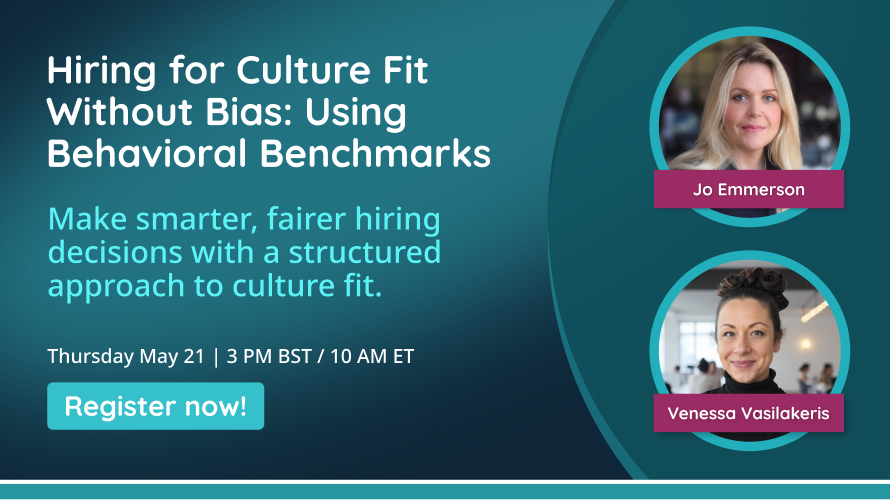
Join us for 'Hiring for Culture Fit Without Bias: Using Behavioral Benchmarks'
Want to take a more structured, fair approach to hiring for culture fit? Join our upcoming webinar to learn how to define clear behavioral benchmarks, reduce bias, and make more consistent hiring decisions.
Save your spot and start building a hiring process that truly works.